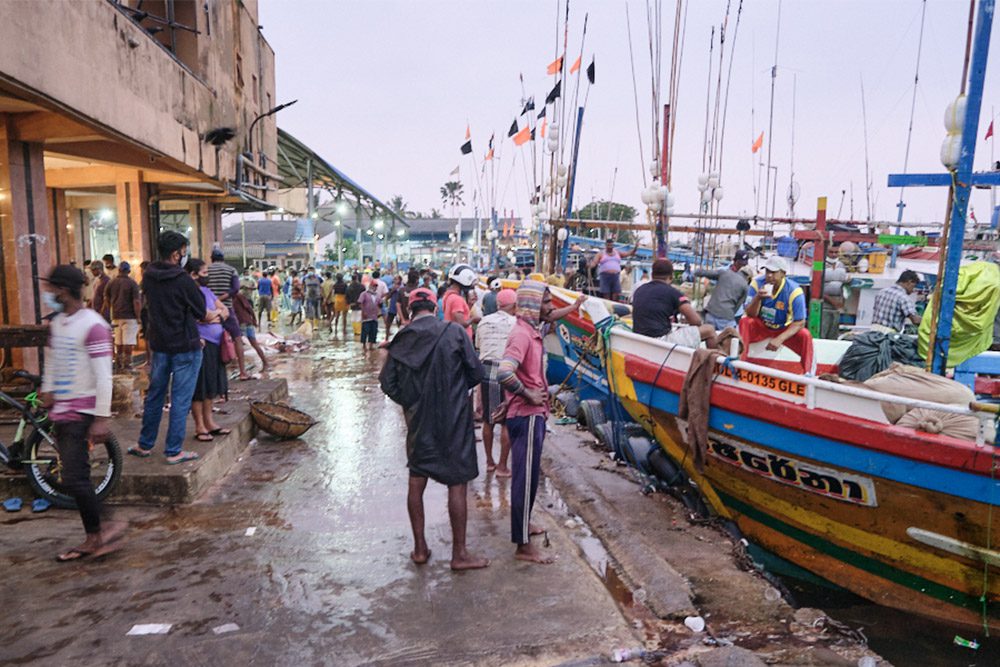
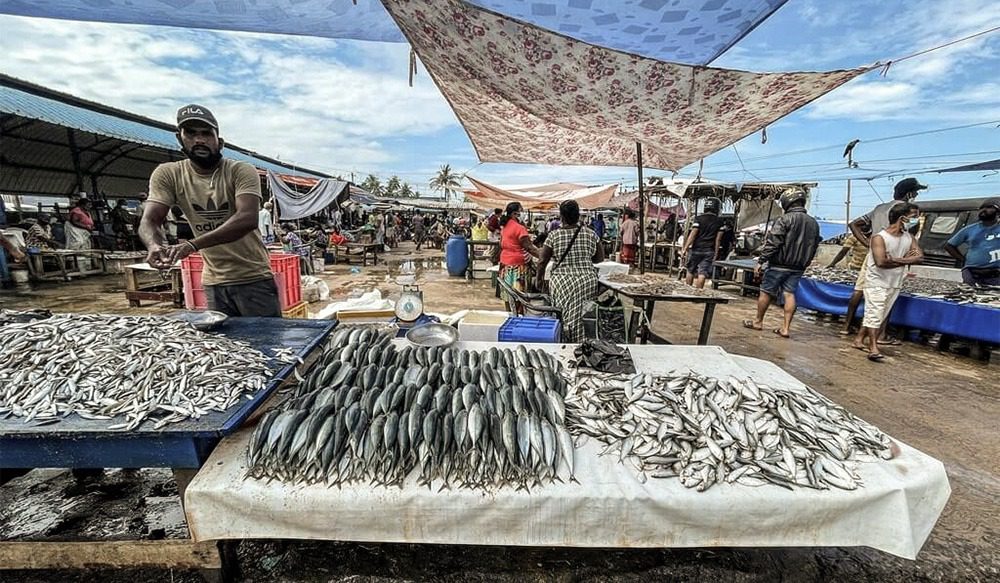
Negombo’s thriving fishing industry a vital economic and social hub
Negombo’s history as a major Sri Lankan fishing port dates back centuries, rooted in the geography of its lagoon and position on the west coast.
Lagoon fishing for prawns, crabs and small fish has long been practiced alongside offshore and coastal fishing, the latter with traditional outrigger sailing canoes.
Colonial-era influences from the Portuguese evolved over the 20th and early 21st centuries. Traditional sailing craft gave way to fiberglass boats with outboard engines, which expanded the range and scale of operations.
These are used inshore for small species such as sardines and herrings, using trammel nets—walls of mesh with floats and weights that can be set stationary or drifted.
Meanwhile, bigger long-distance multi-day boats enable fishermen to stay at sea for weeks at a time. These vessels have crews for 15–45 days, and land much larger catches of tuna and other species.
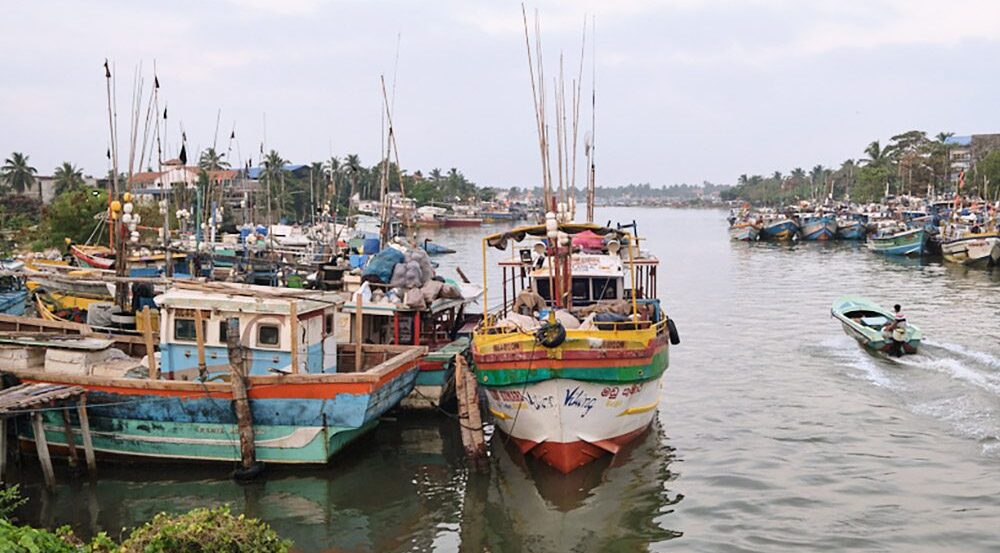
Economic, social hub
The commercial fish market at Negombo—one of Sri Lanka’s largest, and referred to locally as Lellama—is an economic and social hub of the fishing community.
Activity begins before dawn, with fishermen returning from night or multi-day trips and unloading catches ranging from tuna, mackerel and reef fish to crabs, prawns and lobsters.
Buyers including retailers, wholesalers, hotels and restaurants engage in auctions or direct bargaining, which shapes price and distribution across Sri Lanka.
Meanwhile, women play a prominent role in processing and selling the catch, running stalls, and managing the flow of fish and seafood into the market.
These are sold in wet stalls, while lower-priced or surplus fish are laid out on coconut fibre mats and dried in the sun—a traditional preservation method that supplies dried fish for domestic and commercial use.
The market’s operations mirror the broader dynamics of Negombo’s fishing history: from subsistence coastal catches to a complex commercial ecosystem interfacing local tradition with the national economy.
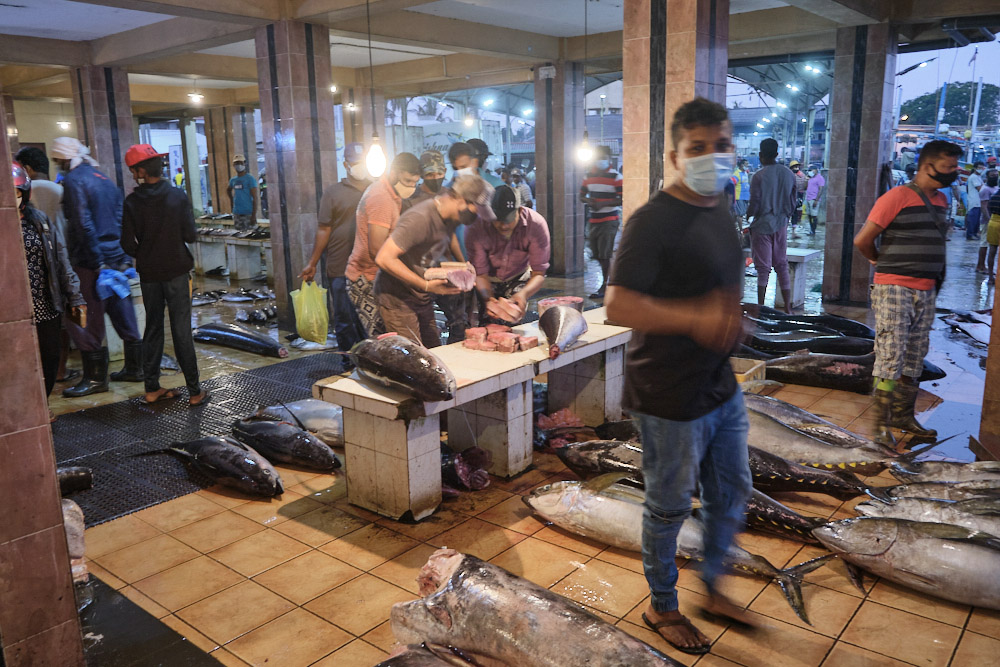
Exports
Sri Lanka’s seafood exports go to a diverse set of international markets, depending on product types that include fresh tuna, frozen fish, shrimp, dried fish, crab and lobster.
For fresh/chilled fish, particularly yellowfin tuna (a major export item), the United States is the largest single market, wih significant shares also going to France, Israel, Canada, Italy, the United Kingdom, Germany, Belgium and the Netherlands.
For frozen fish, especially frozen tuna, the top destinations include the Netherlands, Germany, the United Kingdom, Italy and France. Lesser markets include Switzerland, China, Hong Kong and Canada.
Shrimp and prawn exports, though smaller in absolute volume compared with tuna, supply markets in Japan, the US, the Netherlands, the United Kingdom and other Asian countries. Japan is a key buyer of vannamei and other shrimp products.
For dried and salted fish products the leading export destination is Hong Kong, with secondary markets including Korea, Australia, the US and the United Kingdom, with smaller shipments to Middle Eastern and Oceanic countries.