Fishing is the heartbeat of Negombo, with tourism a close second.
Fishing has for centuries defined the rhythm, identity, and economy of Negombo and is still the backbone of the town’s economy, with tourism a close second.
As a major Sri Lankan commercial fishing hub, the town accounts for a significant percentage of the country’s fish exports, and much of its seafood consumption.
The two industries overlap, such as the fish market acting as a visitor attraction, from which tourist hotels and restaurants source their fresh seafood.
Catamarans
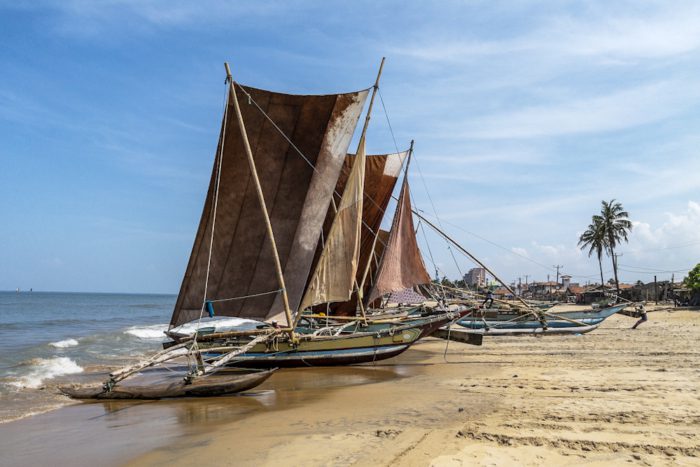
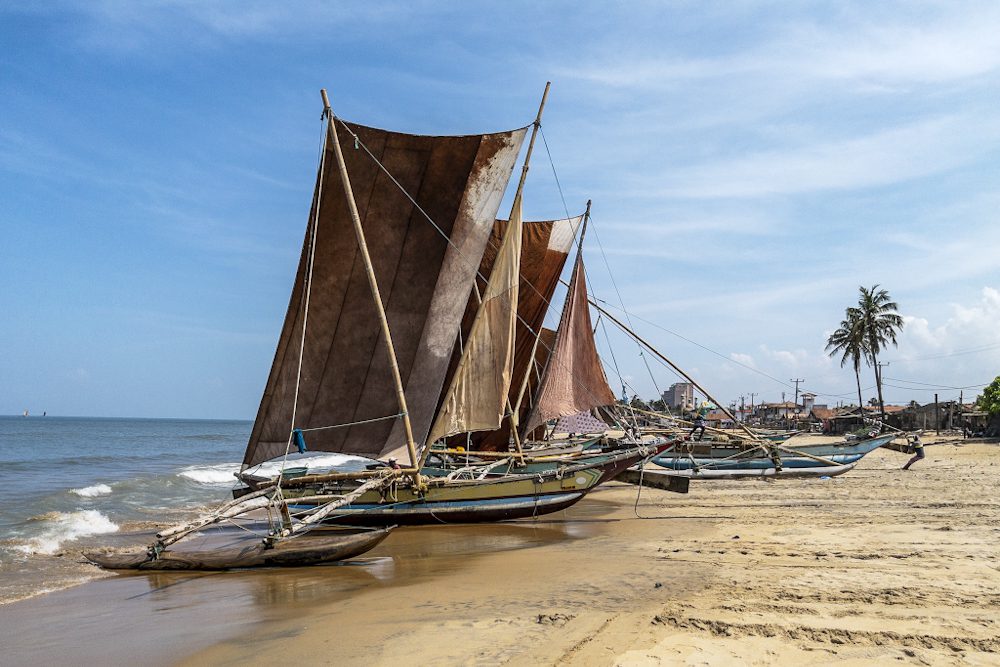
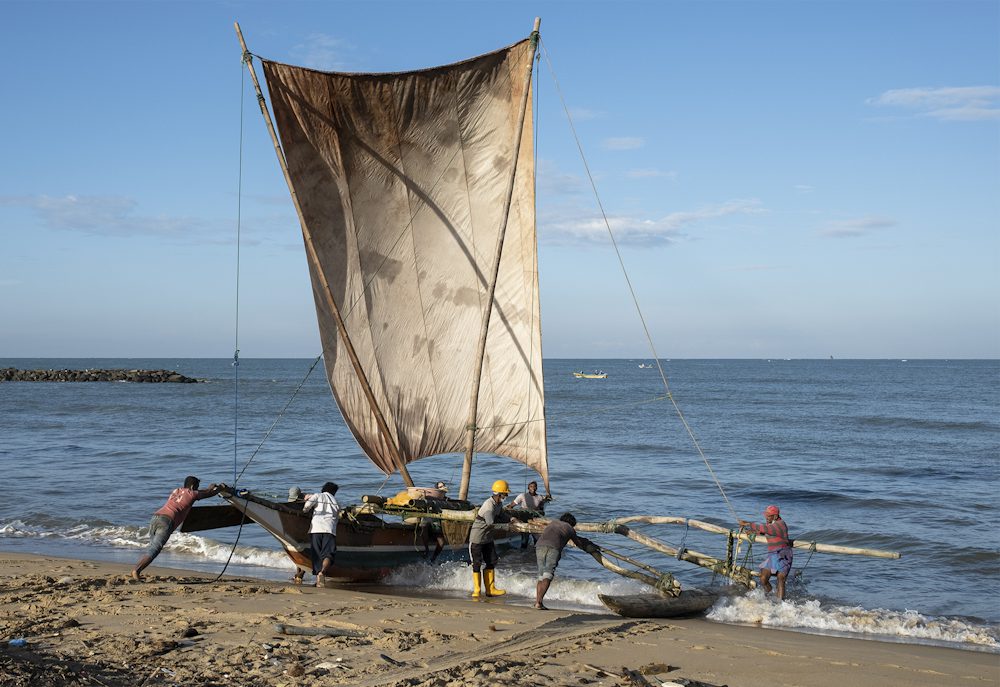
Historically, Negombo’s fishermen relied on simple, wind-powered catamarans—locally known as oruwa—constructed from a hollowed treetrunk (now moulded fibreglass) main hull plus outrigger.
These were and still are launched from the beach, with the fishermen relying on their knowledge of currents and tides to locate their quarry.
Small-scale inshore fishing is another communal method, involving netting from raft-like floating platforms by teams working together.
While these traditional methods still persist—especially along Negombo’s sandy shoreline—today they operate alongside a far more industrialized commercial sector.
Deep sea
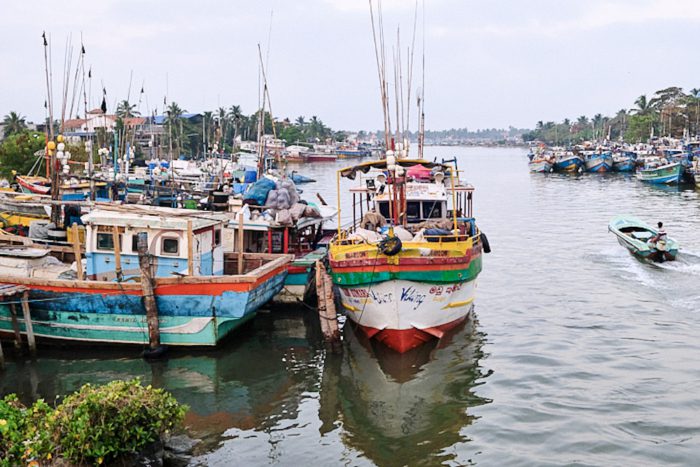
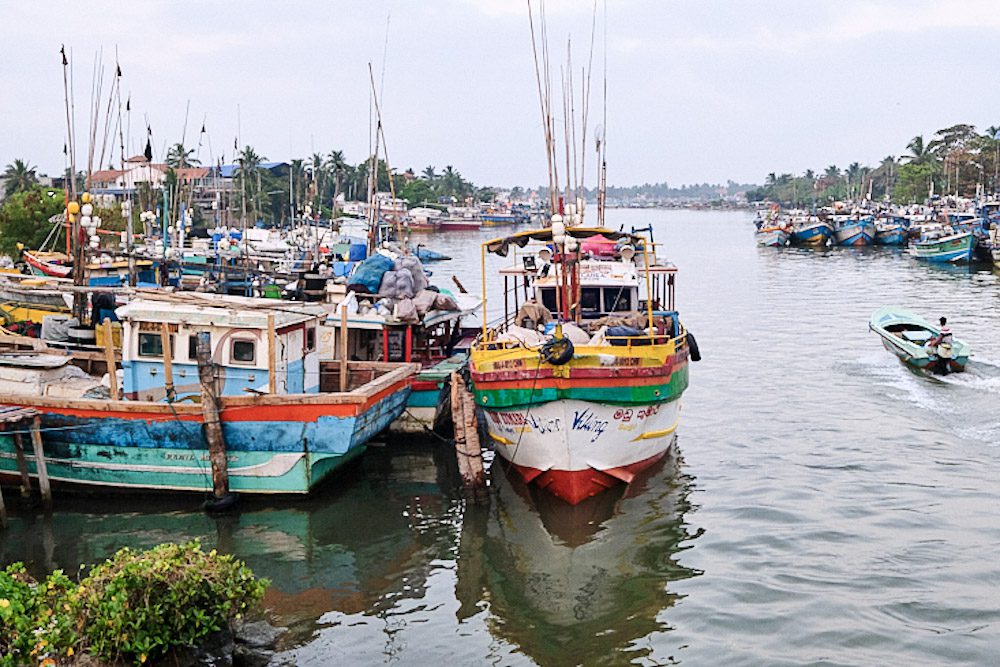
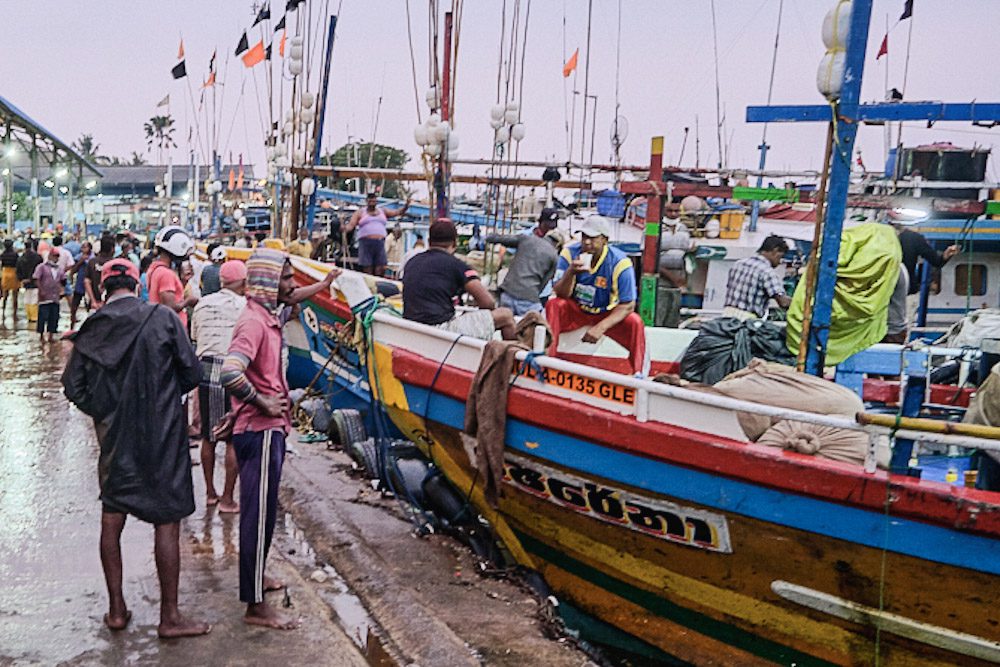
Multi-day fishing vessels now roam the deep-sea waters beyond the lagoon and reef systems.
Equipped with refrigeration units, GPS, and sonar, these boats venture far into the Indian Ocean for days or weeks, targeting high-value species such as tuna and swordfish.
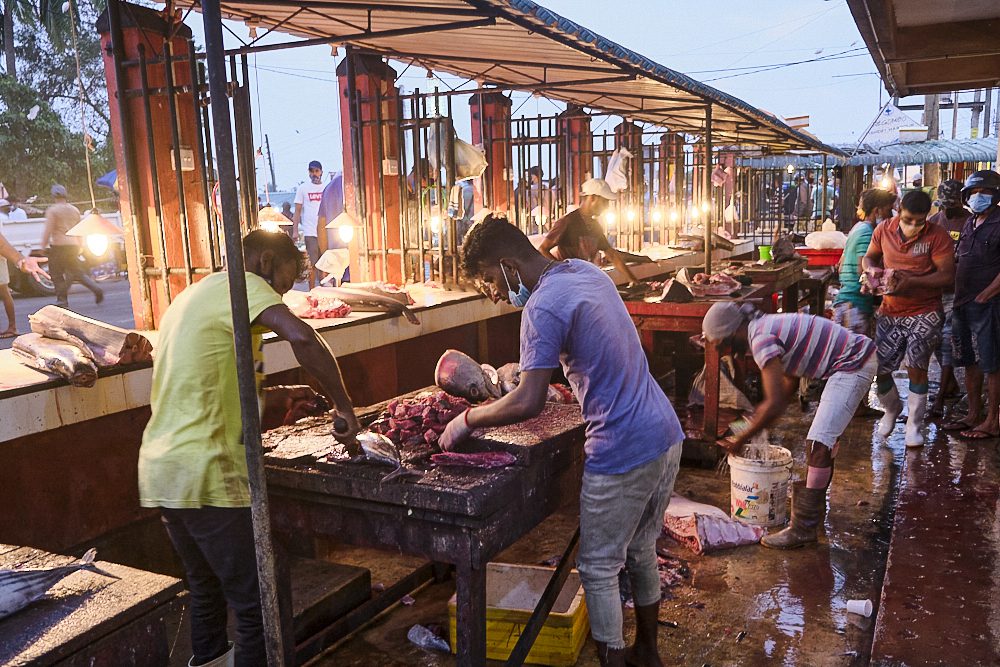
At the centre of this evolving ecosystem lies the bustling Negombo Fish Market, one of the largest and most dynamic fish markets in the country.
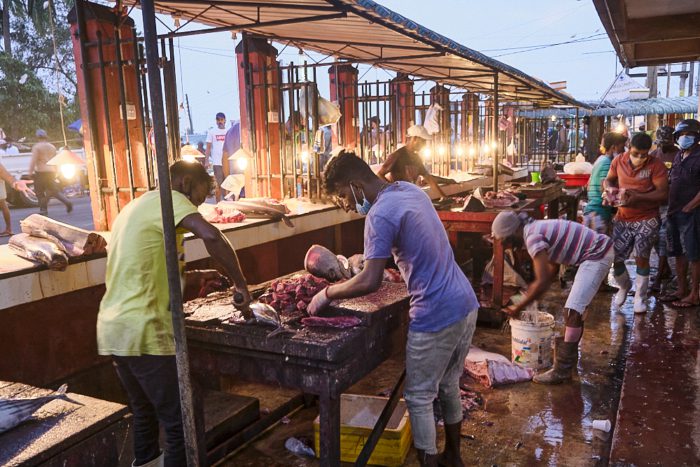
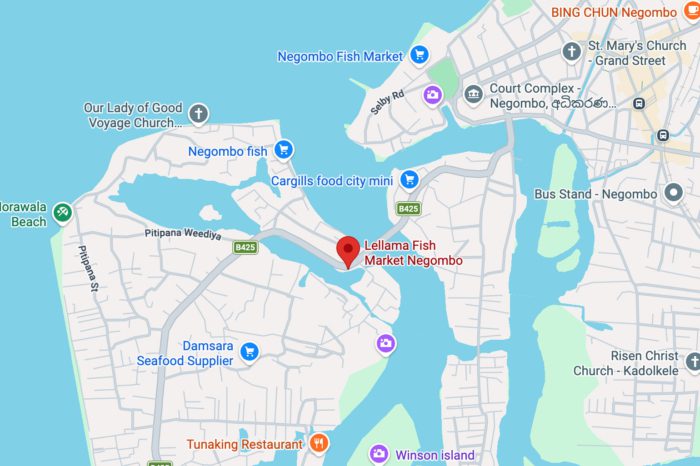
Here, the daily catch—ranging from small reef fish to large pelagics—is sorted, auctioned, and distributed across Sri Lanka.
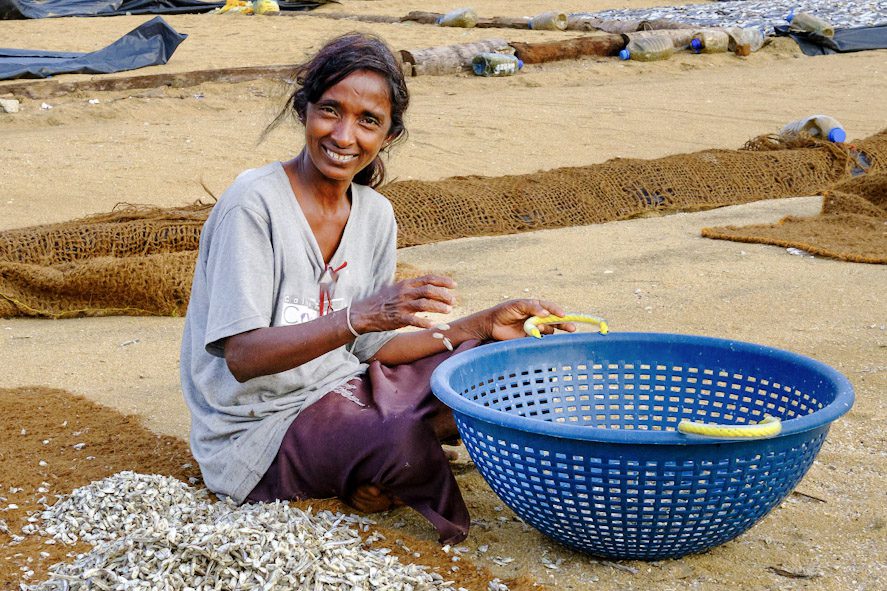
Sun dried
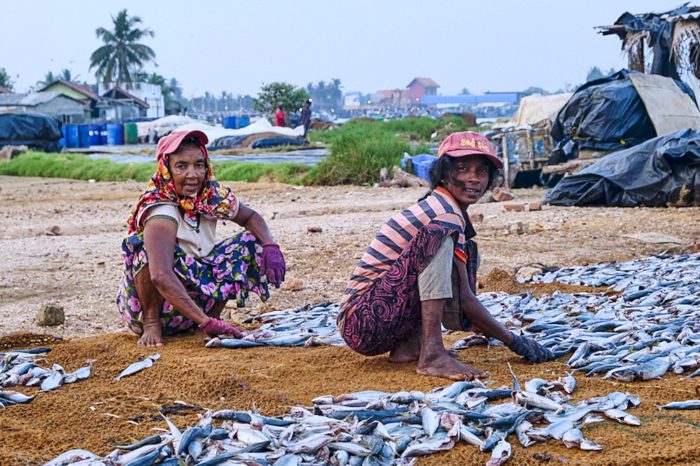
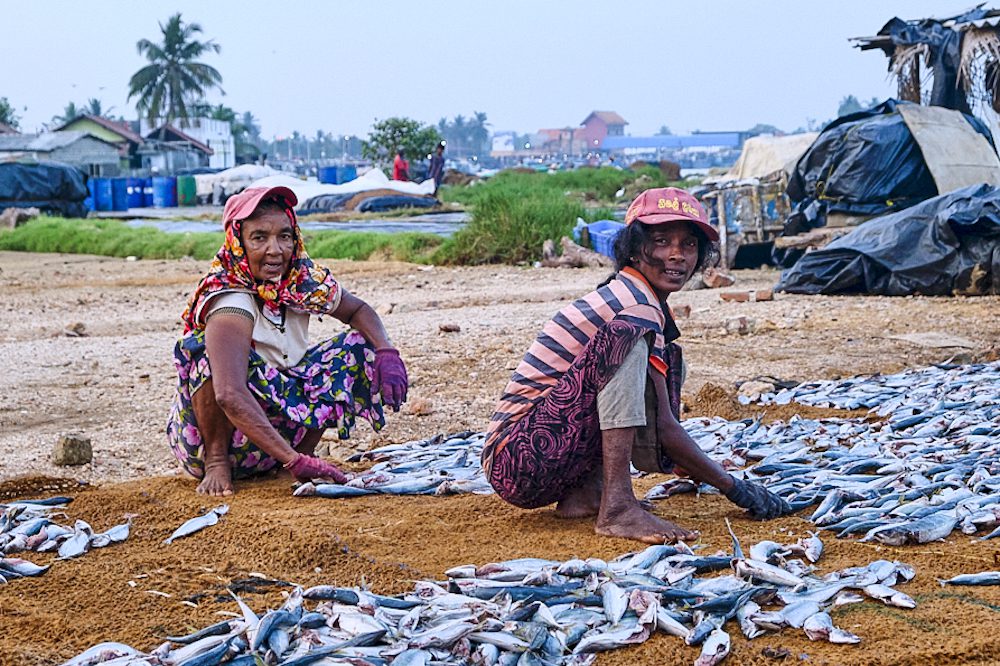
On nearby beaches fish are salted and sun-dried, a striking visual reminder of preservation techniques that predate refrigeration.
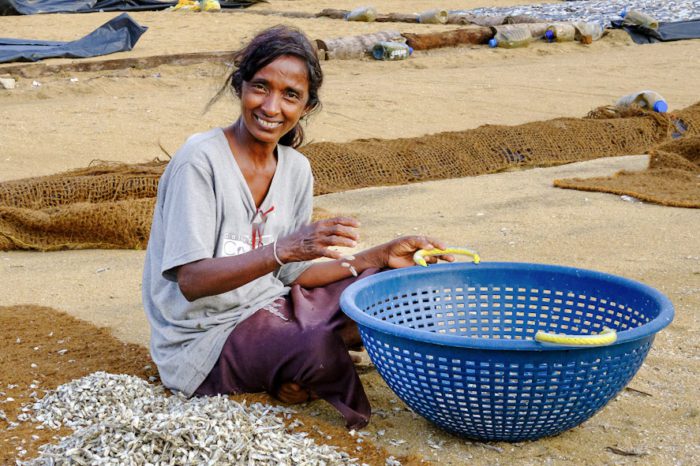
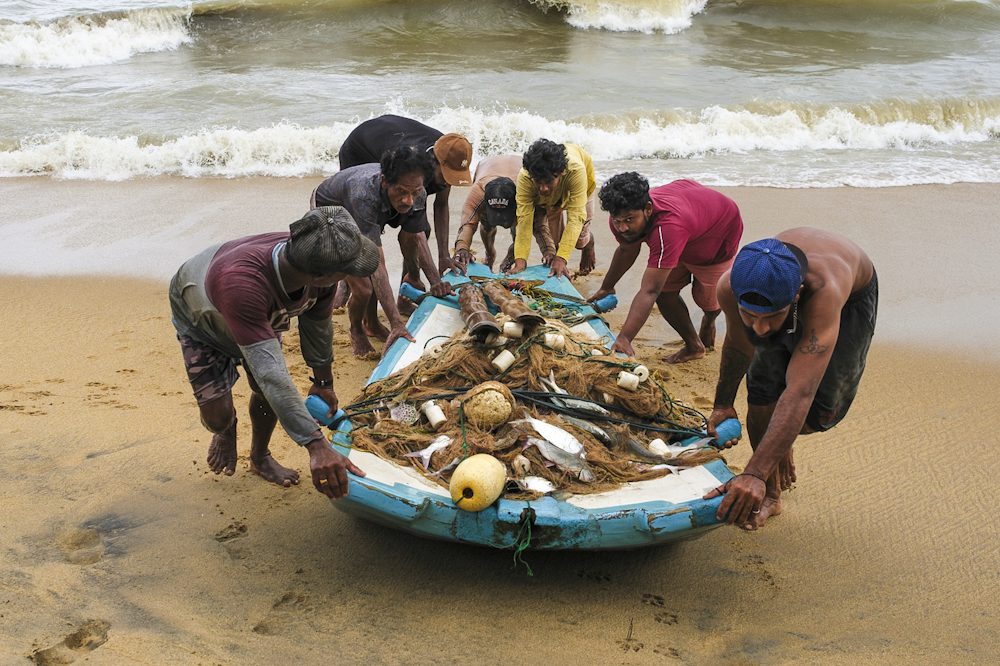
Despite modernization, the essence of fishing in Negombo retains its traditional roots. At dawn, catamarans still dot the horizon, and fishermen still push their boats into the surf by hand.
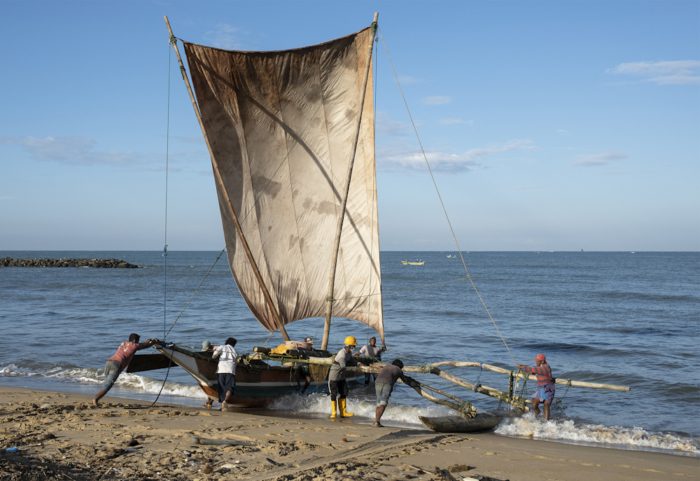
The contrast between old and new is not a contradiction, but a continuum—one that reflects both resilience and adaptation in a changing maritime world.