Angurukaramulla Buddhist Temple: One of Negombo’s most remarkable cultural treasures
Sri Lanka is renowned for its ancient Buddhist heritage, magnificent temples and living spiritual traditions.
And while many visitors head for the famous temples of Kandy, Anuradhapura or Dambulla, one of the most fascinating places of Buddhist worship lies just a few kilometres from Terrace Green Hotel & Spa.
Angurukaramulla Buddhist Temple, also known as Bodhirajaramaya, is a chance to experience Sri Lankan Buddhism in a peaceful setting, while admiring extraordinary architecture, intricate murals and one of the island’s most impressive reclining Buddha statues.
So for travellers staying awhile in Negombo, a visit is an excellent introduction to the culture, history and religious traditions that have shaped Sri Lanka for over 2,300 years.
Where is it?
Angurukaramulla Buddhist Temple is located in the heart of Negombo, approximately 10 minutes by car from the Terrace Green and around 20 minutes from Bandaranaike International Airport.
Despite its convenient location, it remains something of a hidden gem compared with Sri Lanka’s better-known religious sites. It welcomes both Buddhist devotees and visitors from around the world.
A brief history of Buddhism in Sri Lanka
To understand Angurukaramulla, it helps to understand Buddhism itself.
It began in northern India during the 5th century BC with Siddhartha Gautama, who became known as the Buddha, meaning ‘The Enlightened One’.
Rather than worshipping a deity, Buddhism focuses on understanding the nature of suffering while cultivating wisdom, ethical conduct and mental discipline.
The Buddha taught that suffering arises from attachment and craving, and that liberation can be achieved by following the Noble Eightfold Path.
Buddhism arrived in Sri Lanka during the 3rd century BC when the monk Mahinda, traditionally believed to be the son of the Indian Emperor Ashoka, introduced the teachings to King Devanampiya Tissa.
The king embraced Buddhism, and it soon became the island’s principal religion. Over the following centuries, monasteries, temples, libraries and centres of learning flourished across Sri Lanka, helping preserve the Pali Canon—the oldest complete collection of Buddhist scriptures in existence.
Today, approximately 70% of Sri Lanka’s population are Buddhist, and Buddhism continues to influence the country’s culture, festivals, art and daily life.
The history of Angurukaramulla
Although the site has long held religious significance, the present temple largely dates from the late nineteenth century.
Construction began around the 1870s under the guidance of Venerable Sri Sumangala Nayaka Thera, with support from local devotees who wished to create a centre for Buddhist learning and worship.
The temple gradually expanded over the decades, with successive generations adding new buildings, statues and decorative artwork.
And unlike many ancient temples, Angurukaramulla showcases the vibrant artistic traditions of more recent Sri Lankan Buddhist craftsmanship.
Today it remains an active monastery where monks study, meditate and conduct religious ceremonies throughout the year.
What makes Angurukaramulla unique?
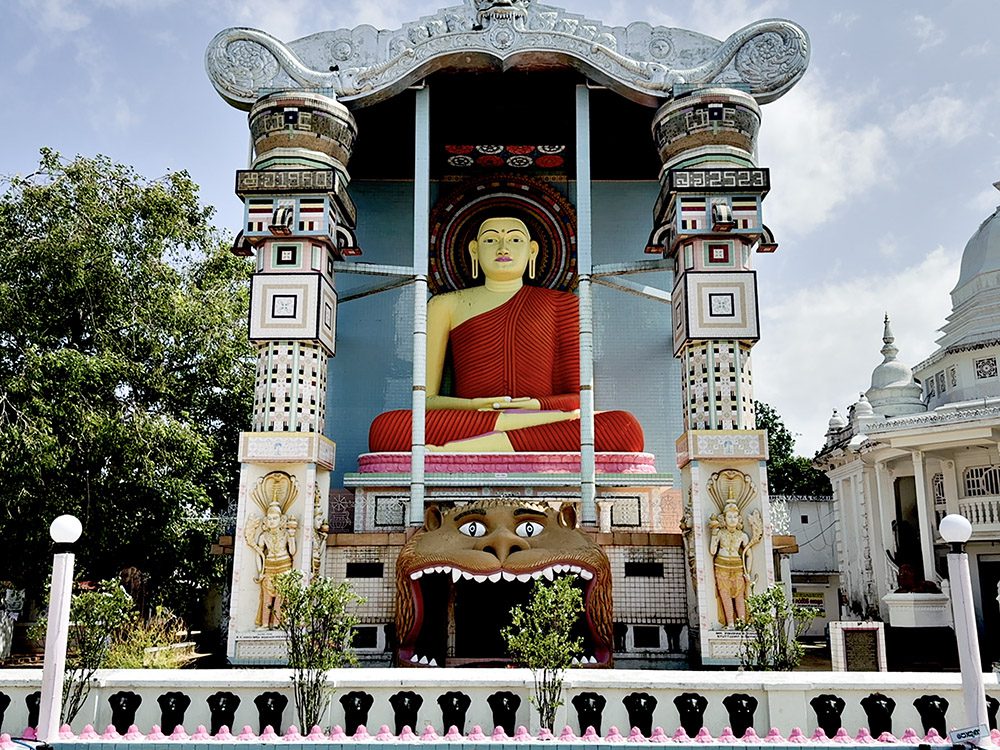
The temple is immediately recognisable by its entrance in the form of the mouth of a fearsome makara, a mythical water creature found throughout South Asian art.
Passing through this portal symbolises leaving behind the distractions of the ordinary world and entering a place dedicated to reflection and spiritual development.
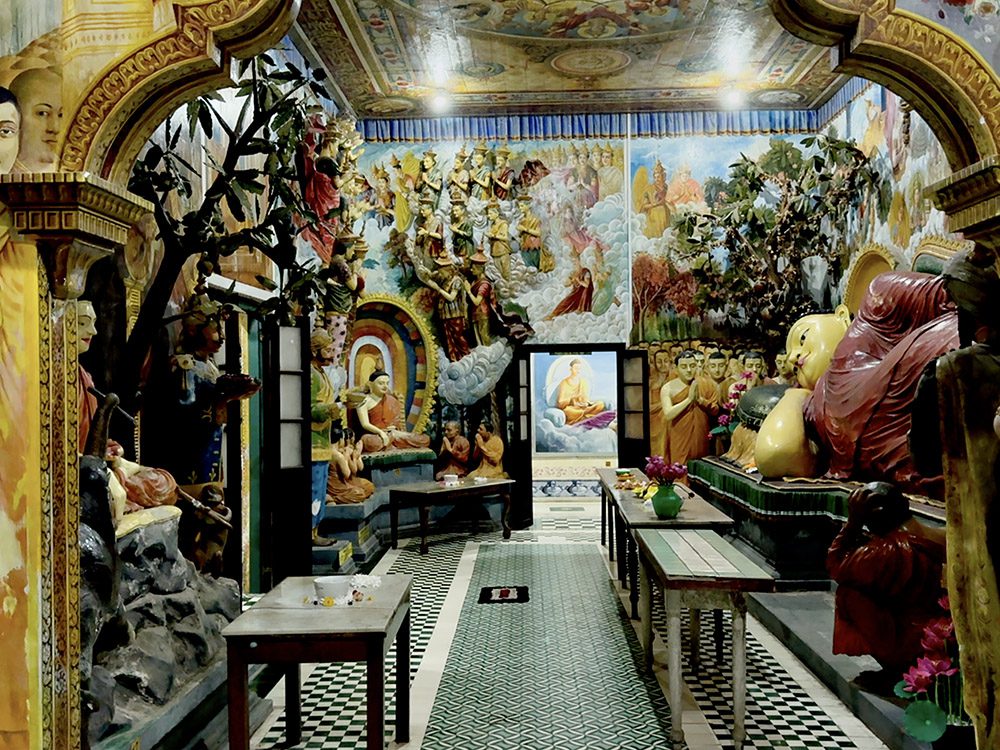
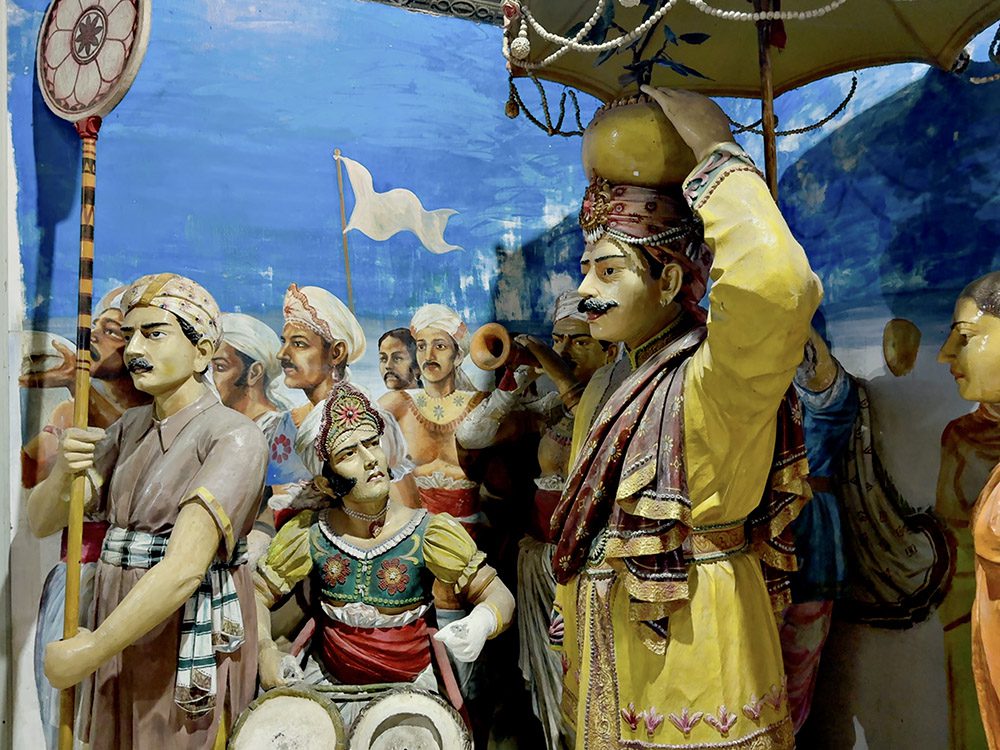
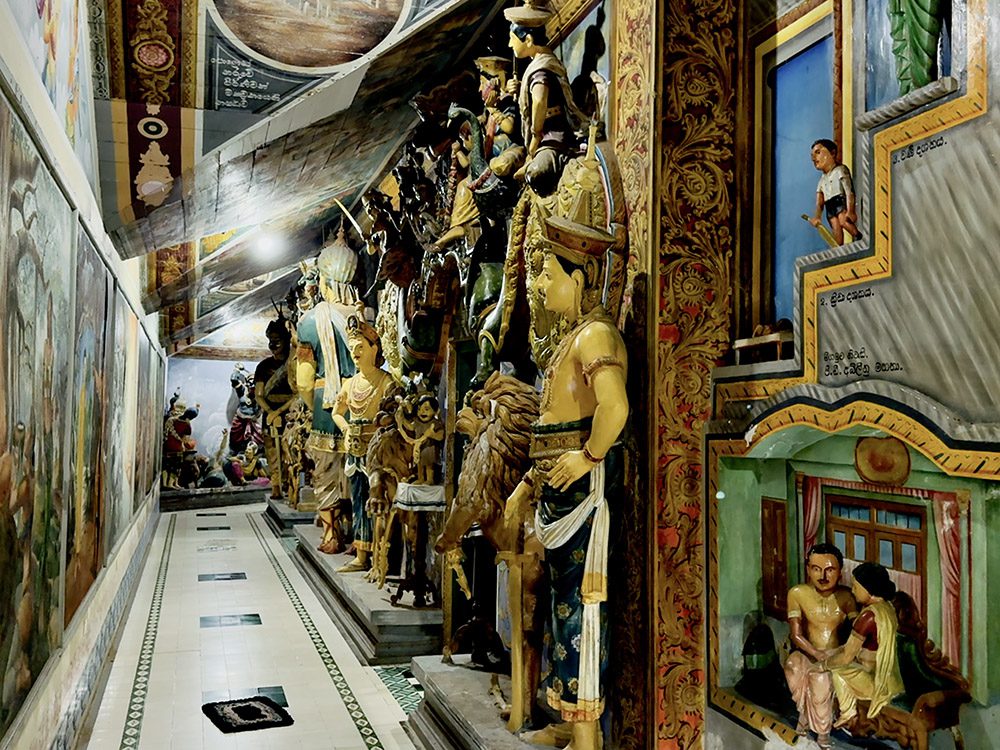
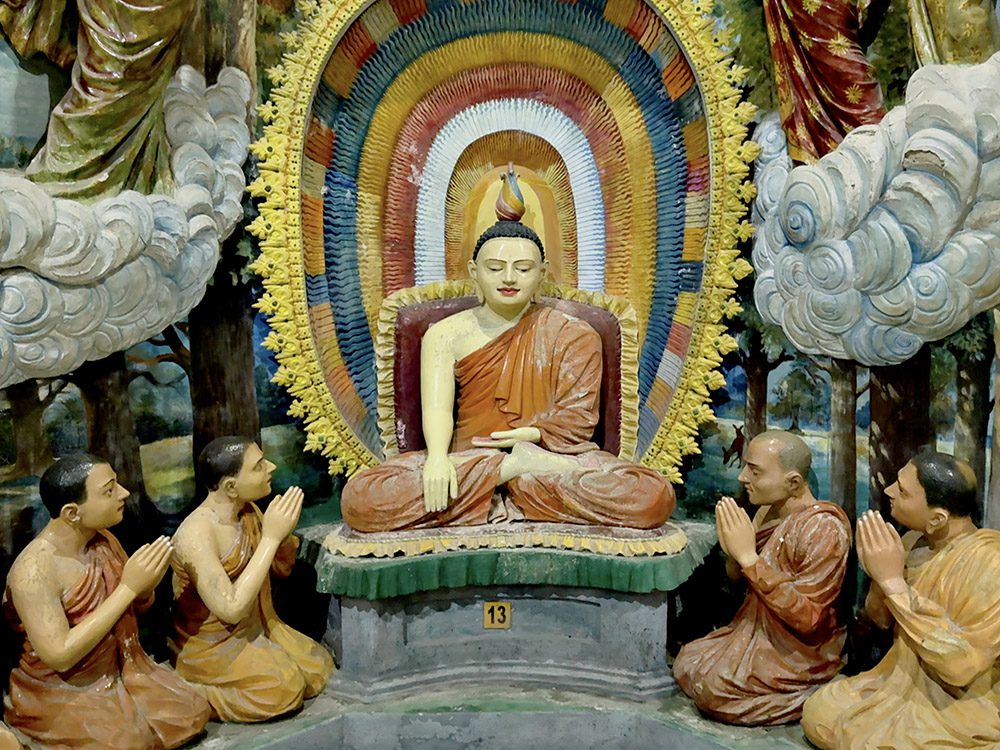
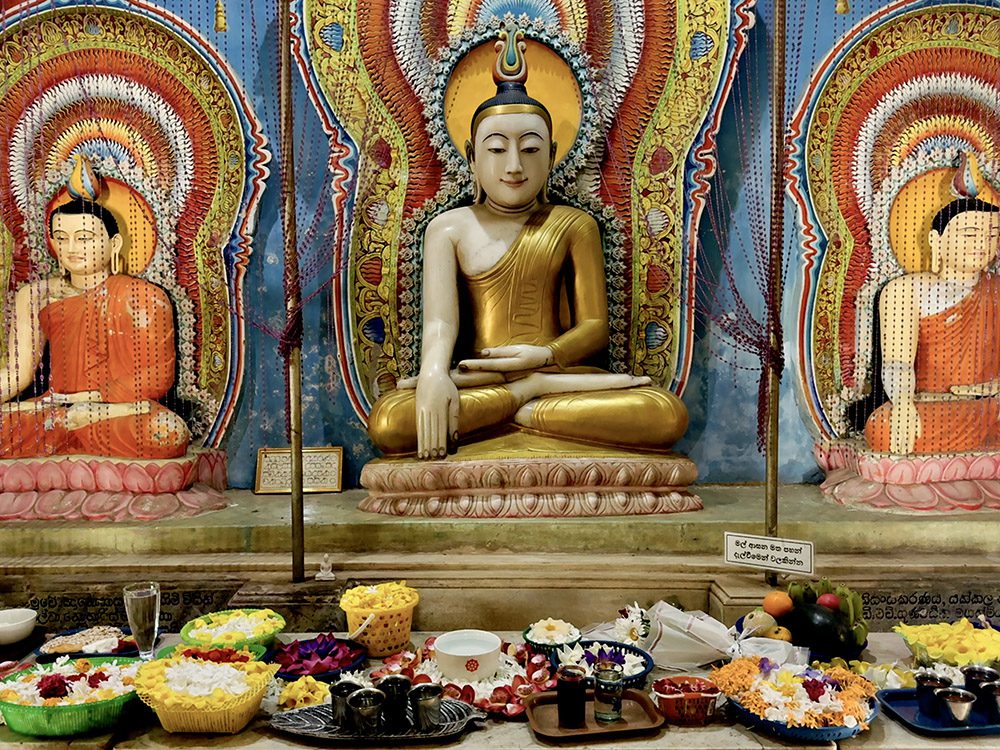
Inside, visitors discover a remarkable collection of statues, murals and sculptures illustrating scenes from the life of the Buddha, Buddhist cosmology and Sri Lankan history.
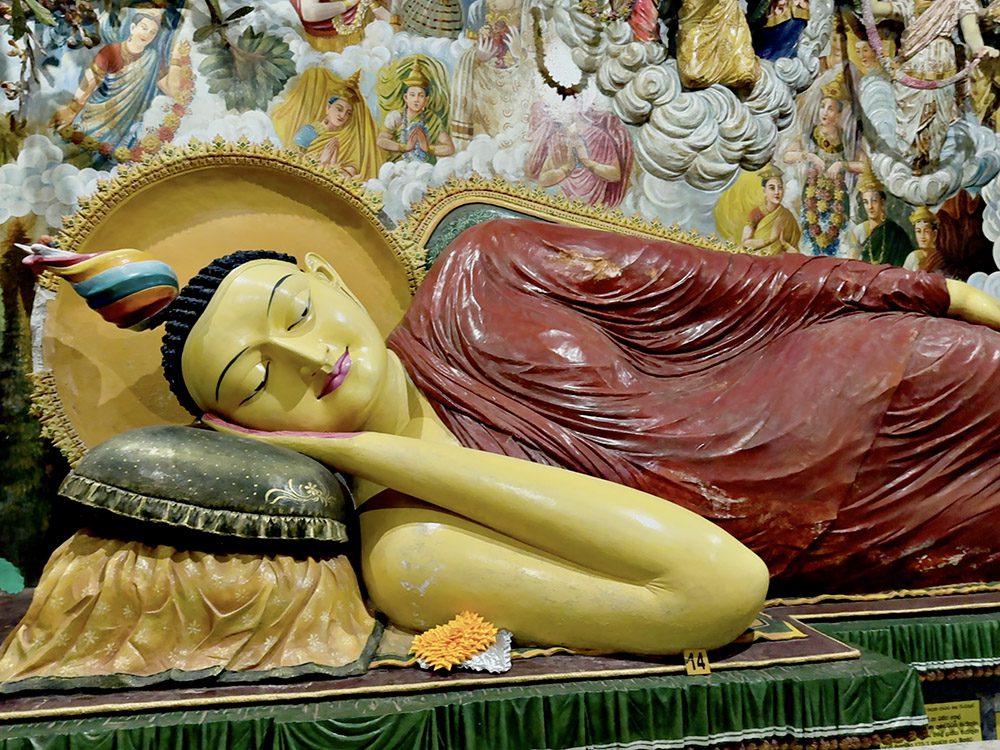
Perhaps the most striking feature is the reclining Buddha statue, measuring approximately six metres in length.
The serene expression represents the Buddha during his final earthly moments before entering Parinirvana, the state beyond the cycle of birth and rebirth.
The temple also houses colourful paintings depicting the Jataka Tales—stories of the Buddha’s previous lives—which teach moral lessons about generosity, compassion, patience and wisdom.
Another fascinating attraction is the chamber portraying Buddhist interpretations of heaven and hell.
These vivid displays are intended not as literal predictions but as moral illustrations encouraging ethical living and personal responsibility.
Art that tells stories
One of Angurukaramulla’s greatest strengths is its visual storytelling.
Every mural, sculpture and carving has been designed to communicate Buddhist teachings to the common people, including those unable to read ancient religious texts.
The paintings combine symbolism with historical narrative, allowing visitors to appreciate both the artistic traditions and philosophical ideas that have shaped Sri Lankan civilisation for centuries.
Even those with little prior knowledge of Buddhism often leave with a greater appreciation of its emphasis on compassion, mindfulness and moderation.
Buddhism and Negombo’s Catholic heritage
One of the most interesting aspects of Negombo is its remarkable religious diversity.
The city is widely known as ‘Little Rome’ because of its unusually high concentration of Roman Catholic churches and its large Catholic population.
This heritage dates largely to Portuguese rule, which began in the early sixteenth century.
Portuguese missionaries actively promoted Catholicism, sometimes alongside policies that placed pressure on existing religious communities.
Dutch rule later favoured Protestantism, while British colonial administration generally adopted a more pluralistic approach.
Despite periods of religious tension during the colonial era, modern Negombo is notable for the way Buddhist temples, Catholic churches, Hindu kovils and Muslim mosques exist within the same community.
Today, the relationship between Buddhists and Catholics in Negombo is generally characterised by peaceful coexistence, mutual respect and practical cooperation in everyday life.
Families, businesses and neighbourhoods frequently include people from different faiths, reflecting Sri Lanka’s long tradition of religious diversity.
Visitors can therefore experience two distinct yet complementary aspects of Negombo’s cultural identity in a single day: the tranquillity of Angurukaramulla Buddhist Temple and the architectural beauty of the city’s historic Catholic churches.
Why visitors enjoy Angurukaramulla
Unlike some of Sri Lanka’s busiest heritage attractions, Angurukaramulla often feels calm and unhurried.
Visitors appreciate:
- Beautiful Buddhist artwork and murals.
- A spectacular dragon entrance unlike any other temple.
- A peaceful atmosphere ideal for quiet reflection.
- Insight into Sri Lankan religion and culture.
- Convenient access from Negombo hotels and the international airport.
- Excellent photographic opportunities while respecting religious customs.
Whether you are religious or simply interested in history and culture, the temple offers an authentic glimpse into Sri Lankan life.
Be respectful
As Angurukaramulla is an active place of worship, visitors should observe a few simple customs:
- Dress modestly by covering shoulders and knees.
- Remove shoes and hats before entering temple buildings.
- Speak quietly and avoid disturbing worshippers.
- Never pose with your back directly against Buddha statues for photographs.
- Ask permission before photographing monks or religious ceremonies.
- Small donations are appreciated but entirely voluntary.
These simple gestures help preserve the peaceful atmosphere that makes the temple special.
Frequently asked questions
Is Angurukaramulla Temple worth visiting?
Yes. It is one of Negombo’s most distinctive cultural attractions and provides an excellent introduction to Sri Lankan Buddhism, architecture and religious art.
How long should I allow for a visit?
Most visitors spend between one and two hours exploring the temple complex, viewing the murals and enjoying the peaceful surroundings.
Is there an entrance fee?
Admission policies can change. Visitors are welcome, and donations towards the temple’s maintenance are appreciated.
Why is the entrance a dragon’s mouth?
The dragon-like makara is a protective mythical creature in Buddhist and Hindu art. Passing through its mouth symbolises entering a sacred space while leaving worldly distractions behind.
Can non-Buddhists visit?
Absolutely. Visitors of all religions and backgrounds are welcome provided they behave respectfully and observe temple etiquette.
Is the temple suitable for children?
Yes. Children are often fascinated by the colourful murals, giant statues and dragon entrance. Parents should encourage respectful behaviour appropriate to a place of worship.
Can I visit before or after my flight?
Yes. The temple’s location close to Bandaranaike International Airport makes it an ideal cultural stop for travellers arriving in or departing from Sri Lanka.
A window into Sri Lanka’s spiritual heritage
Angurukaramulla Buddhist Temple is far more than an attractive building. It represents centuries of faith, artistic expression and philosophical thought that continue to shape Sri Lankan society today.
Its striking architecture, remarkable artwork and peaceful atmosphere make it one of Negombo’s most rewarding cultural experiences.
Equally significant is its location within a city where Buddhist temples stand alongside historic Catholic churches, illustrating how different religious traditions have collectively shaped Negombo’s unique identity.
Whether your interest lies in history, architecture, photography or spirituality, a visit to Angurukaramulla offers a unique experience and a deeper understanding of one of Asia’s oldest continuously practised religious traditions.
For guests staying in Negombo, it remains one of the city’s essential places to visit—a reminder that Sri Lanka’s greatest treasures are often found not only in its famous ancient capitals, but also in the quiet places where faith, history and community continue to thrive.