
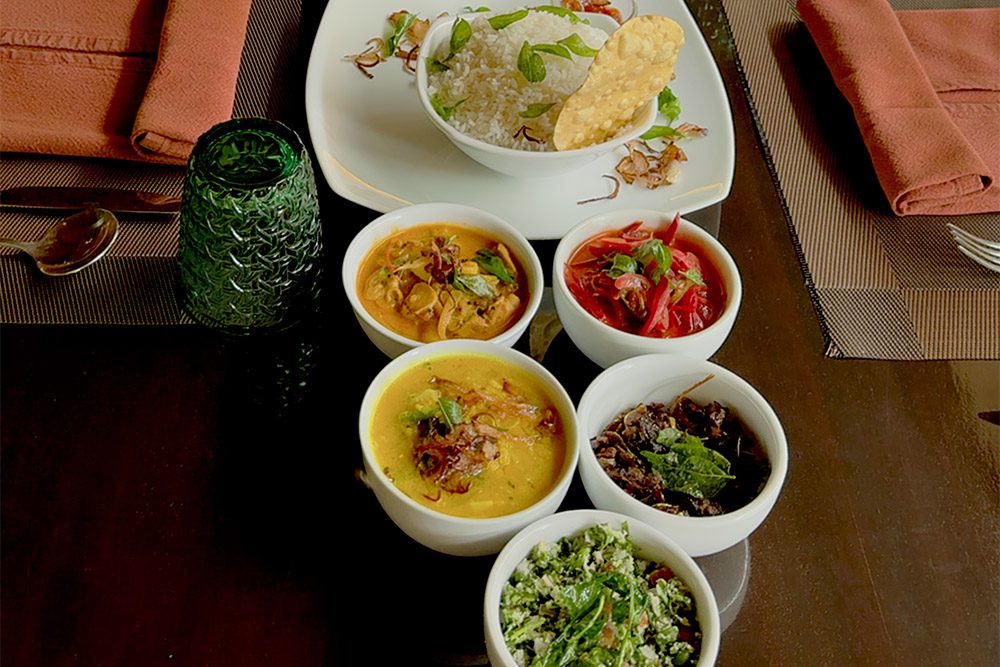
Nutritional benefits of Sri Lankan rice and curry: A balanced meal rooted in tradition!
Sri Lankan rice and curry is far more than a popular national dish, which is why we feature it on our Salt restaurant menu!
It is a nutritionally balanced meal that has evolved over centuries, combining whole grains, vegetables, legumes, herbs, spices, and healthy fats into a diverse and satisfying experience.
In an age where highly processed foods dominate many diets, Sri Lankan rice and curry offers a compelling example of how traditional food culture can support health, wellness, and longevity.
From antioxidant-rich spices to fibre-packed vegetables and protein-rich legumes, every component contributes to a meal that is both nourishing and flavourful.
What makes Sri Lankan rice and curry unique?
Unlike many single-dish meals, Sri Lankan rice and curry typically consists of rice accompanied by several vegetable, legume, and protein-based curries.
A traditional plate may include:
- Red or white rice
- Lentil dhal curry
- Green leafy vegetables such as gotukola or mukunuwenna
- Pumpkin, beetroot, jackfruit, or brinjal curries
- Coconut sambols
- Fish, chicken, or egg curry
- Pickles and chutneys
The result is a colourful meal that delivers a wide range of nutrients in a single meal.
Nutrition experts often emphasise the importance of dietary diversity, and Sri Lankan rice and curry naturally embodies this principle.
The benefits of traditional Sri Lankan rice
Rice forms the foundation of the meal, but not all rice varieties are equal.
Traditional Sri Lankan rice varieties such as red rice, kuruluthuda, suwandel, and pachchaperumal contain significantly more fibre, vitamins, and minerals than highly refined white rice.
Red rice, in particular, offers:
- Dietary fibre that supports digestive health
- Magnesium for muscle and nerve function
- Iron for healthy blood production
- Antioxidants found in the outer bran layer
- Slow-release carbohydrates that provide sustained energy
Because many traditional rice varieties have a lower glycaemic impact than refined grains, they may help support more stable blood sugar levels when consumed as part of a balanced meal.
The power of plant-based curries
One of the greatest nutritional strengths of Sri Lankan cuisine lies in its extensive use of vegetables.
A typical rice and curry meal may contain four to six different vegetable preparations, each contributing unique vitamins, minerals, and phytonutrients.
Popular vegetable curries provide benefits such as:
Pumpkin
Rich in beta-carotene, which the body converts into vitamin A, pumpkin supports immune function, vision, and skin health.
Beetroot
Contains nitrates that may help support healthy blood circulation and cardiovascular function.
Jackfruit
Young jackfruit is high in fibre and contains important minerals including potassium and magnesium.
Brinjal (Eggplant)
Provides antioxidants known as anthocyanins, which help protect cells from oxidative stress.
Green Leafy Vegetables
Traditional greens such as gotukola, mukunuwenna, and kankun are excellent sources of vitamins A, C, and K, along with iron and folate.
Lentils: Sri Lanka’s everyday superfood
Dhal curry is a staple of Sri Lankan cuisine and an important source of plant-based nutrition.
Red lentils provide:
- Protein
- Fibre
- Iron
- Folate
- Potassium
According to nutrition researchers, legumes are among the most beneficial foods for long-term health due to their ability to support heart health, digestive health, and healthy weight management.
Combining lentils with rice also creates a more complete amino acid profile, improving overall protein quality.
The health benefits of coconut
Coconut is an integral part of Sri Lankan cooking and appears in curries, sambols, and coconut milk-based dishes.
While coconut contains saturated fat, current research suggests that whole-food sources of coconut may offer nutritional benefits when consumed in moderation as part of a balanced diet.
Coconut provides:
- Medium-chain triglycerides (MCTs)
- Dietary fibre
- Manganese
- Copper
- Selenium
Fresh coconut sambol also contains onions, chillies, and lime, adding further vitamins, antioxidants, and flavour.
The healing power of Sri Lankan spices
Sri Lankan cuisine is renowned for its sophisticated use of spices, many of which have been studied extensively for their potential health benefits.
Turmeric
Contains curcumin, a compound known for its anti-inflammatory and antioxidant properties.
Cinnamon
Sri Lanka is famous for Ceylon cinnamon, which may help support healthy blood sugar regulation.
Ginger
Traditionally used to support digestion and reduce nausea.
Black Pepper
Contains piperine, which enhances the absorption of certain nutrients, including curcumin.
Curry Leaves
Rich in antioxidants and widely used in traditional cooking and Ayurveda.
Together, these spices contribute not only flavour but also a variety of bioactive compounds that support overall health and wellbeing.
Why rice and curry supports balanced nutrition
Many nutritionists encourage meals that include complex carbohydrates, protein, healthy fats, and vegetables.
A traditional Sri Lankan rice and curry meal naturally achieves this balance:
- Rice provides energy-rich carbohydrates.
- Lentils, fish, eggs, or meat contribute protein.
- Coconut supplies healthy fats.
- Vegetables add vitamins, minerals, and fibre.
- Herbs and spices provide antioxidants and phytochemicals.
This combination promotes satiety and delivers a broad spectrum of nutrients that support overall health.
Expert opinion: questions and answers
To better understand the nutritional value of Sri Lankan rice and curry, we asked nutrition expert Dr Anjali Perera, a registered nutritionist and public health researcher.
Is rice and curry a healthy meal?
Absolutely. When prepared using traditional methods and eaten in appropriate portions, rice and curry is one of the most balanced meals available. It combines carbohydrates, protein, fibre, healthy fats, and a wide variety of micronutrients.
Why is dietary diversity important?
Different vegetables contain different nutrients and protective compounds. A typical Sri Lankan rice and curry meal includes several vegetables at once, which helps increase nutrient intake and supports long-term health.
Are traditional rice varieties healthier than white rice?
Traditional red rice varieties generally contain more fibre, minerals, and antioxidants than highly polished white rice. They are often more filling and can help support better blood sugar control.
What role do spices play in nutrition?
Spices contribute much more than flavour. Turmeric, cinnamon, ginger, and curry leaves, for example, contain compounds that have antioxidant and anti-inflammatory properties. They are an important part of the nutritional value of Sri Lankan cuisine.
Can rice and curry fit into a modern healthy lifestyle?
Certainly. In fact, many modern dietary recommendations encourage eating patterns that closely resemble traditional Sri Lankan meals: more vegetables, more legumes, more whole foods, and fewer processed products.
A traditional meal for modern wellness
As interest grows in natural foods, holistic wellness, and sustainable eating, Sri Lankan rice and curry offers a valuable reminder that healthy eating does not need to be complicated.
Built around locally sourced ingredients, diverse vegetables, traditional grains, and nutrient-rich spices, this iconic dish provides a balance of flavour and nutrition that has stood the test of time.
Whether enjoyed in a family home, a restaurant or hotel, Sri Lankan rice and curry remains one of the country’s greatest culinary creations—nourishing both body and soul while showcasing the rich agricultural and cultural heritage of Sri Lanka.